Pingree Priestly and Charity Haseltine Osborne Plott House
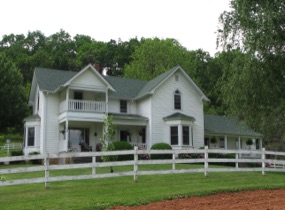
Pingree and Charity Plott built their home on a knoll on a portion of his father’s land which, at the time, comprised approximately 900 acres. At the time of Pingree’s death, land holdings contained 1,311 acres that included the large white two-story Victorian detailed L-shaped wooden frame structure built by the Reverend Jesse Stalcup in 1867. The nine rooms allowed sufficient space for the couple’s five sons and one daughter. Several members of the household contracted tuberculosis, evident by the blue window panes said to be soothing for patients suffering from consumption. Plott operated a mill and farmed the land. For more information about the Plott House and family see Legends, Tales & History of Cold Mountain, Book 1. See also Walking in the Footsteps of Those Who Came Before Us DVD. An unknown artist painted a picture of the Plott family in front of the house that is included in the Historic Preservation art print collection. Also in the collection are a painting of the house by artist Jason Hawkins and a colored drawing by artist Linda Anders Sizemore
Riverhouse Acres
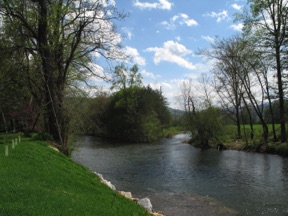
Riverhouse Acres currently comprises a house, a campground, and an organic garden alongside the Pigeon River at the location where the East and West Forks of the river merge. A part of the original William Cathey land grant, the site was, according to oral history, probably utilized by the Native Americans who inhabited the area. The location became a popular site for religious camp meetings during the 1800s. Bethel, meaning “House of God,” changed its name from the original Native American moniker, Sonoma, as well as its Forks of Pigeon reference, to its current name as a result of the religious fervor that encouraged local citizens to prefer the Biblical reference for the community’s name. For more information about Riverhouse Acres see Legends, Tales & History of Cold Mountain, Book 1, and Cold Mountain Heritage Driving Tour CD.
Rutherford Trace
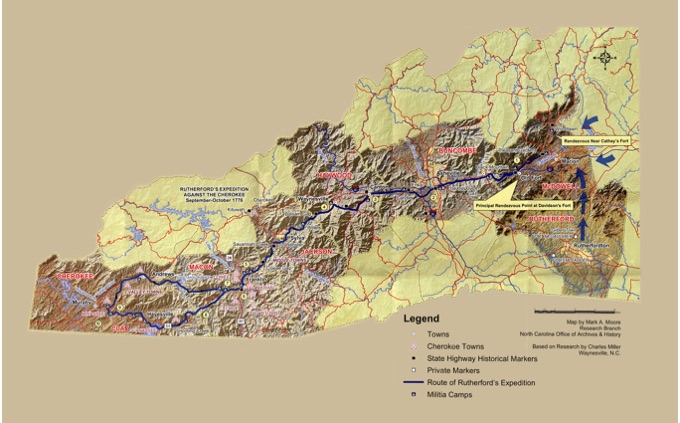
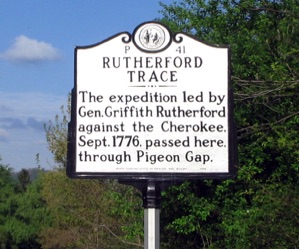
The Rutherford Trace march proceeded through Bethel and beyond in 1776. General Griffith Rutherford and his more than two thousand troops conducted a scorched earth progression against thirty-six Cherokee villages in order to eradicate Cherokee resistance to white settlement in the area. A state historic marker commemorates the historic trek on Highway #276 across Waynesville Mountain. See also Walking in the Footsteps of Those Who Came Before Us DVD.


The Country Home
now
Pigeon Valley Rest Home
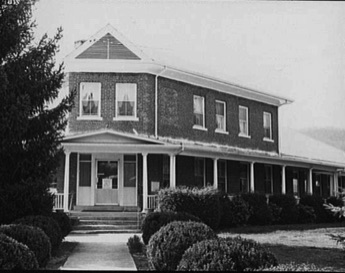
Built in 1911, this large three-story Colonial Revival brick structure was originally called “the County House” or “the County Home.” In the 18th and 19th centuries, taxpayer supported homes for indigent
individuals/families, also known as “almshouses” or “poor houses,” came into existence as a means of aiding the sick and unfortunate. Most of these poor houses included land for farming, and individuals housed there were expected, if able, to work on the farm. The Bethel facility incorporated a farm into its operation. Poor House laws at the time authorized each county to “provide for the maintenance and well-ordering of the poor and to employ biennially a sane competent person as overseer of the poor.” (quote from article about Wake County poor houses.) These residents were cared for at the expense of the county with the intention of releasing them as soon if their situations improved. Most poor houses had their own cemeteries, as did the County Home located in Bethel. At one time, the basement-level portion of the building housed overflow prisoners. The Bethel location was the only County Home in Haywood County.
The County Home building transitioned to housing elderly residents in the 1940s -1950s, and the name was changed to the “Pigeon Valley Rest Home” that exists under the auspices of Silver Bluff Village, owned by the Leatherwood family.